
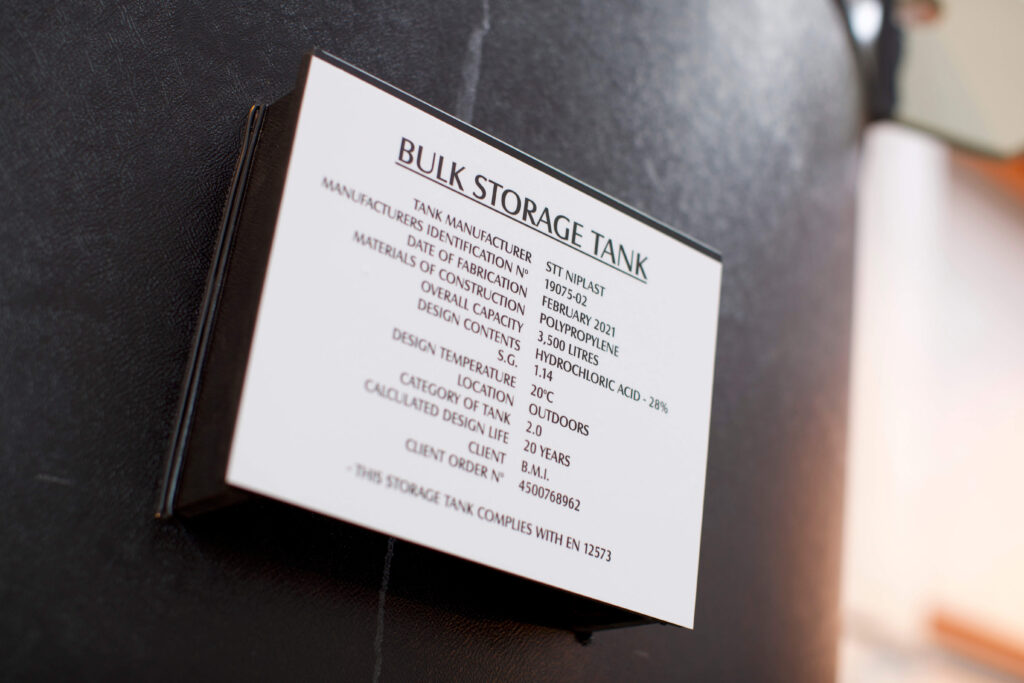
We produce a wide range of plastic storage tanks made from high-quality thermoplastic materials. But what is a thermoplastic, and what are the different types?
A thermoplastic is a type of plastic that softens when heated and hardens when cooled. This means it can be moulded, reshaped, and recycled multiple times without significantly changing its properties. Thermoplastics such as polyethylene, polypropylene and PVDF have a variety of properties that make them excellent for water and chemical storage tanks.
In this blog, we’re going to run through the types of thermoplastics used for storage tanks, what they are, how they’re made and why they’re so useful as water and chemical storage materials.
What is Polyethylene?
Polyethylene (PE) is the most commonly produced plastic. It’s used in a lot of forms of packaging, such as plastic bottles and bags. Its strength and resistance to corrosion not only make it good for packaging, but it makes it an excellent material for industrial applications.
There are different types of polyethylene based on density, HDPE (high-density polyethylene), LDPE (low-density polyethylene) and MDPE (medium-density polyethylene).
How is Polyethylene made?
Polyethylene is made by polymerising ethylene, a simple hydrocarbon gas derived primarily from natural gas or crude oil. During the manufacturing process, thousands of ethylene molecules are chemically bonded together to form long molecular chains, creating the polyethylene plastic used in a wide range of industrial and consumer products.
The exact production method determines the properties of the finished material. For example:
- HDPE (High-Density Polyethylene) is produced using catalysts and low-pressure processes, resulting in tightly packed molecular chains that provide high strength, rigidity, and chemical resistance.
- LDPE (Low-Density Polyethylene) is typically produced under high pressure, creating a more flexible material with lower density.
- MDPE (Medium-Density Polyethylene) offers a balance between the strength of HDPE and the flexibility of LDPE.
Once produced, the polyethylene resin is supplied as small pellets, which can then be moulded, extruded or fabricated into products such as storage tanks, pipework, containers and packaging.
What are the benefits of a Polyethylene tank?
- Excellent Chemical Resistance: Polyethylene tanks are highly resistant to a broad range of chemicals, acids, alkalis and industrial liquids. This high level of chemical compatibility makes polyethylene chemical storage tanks a reliable choice for safely storing corrosive substances across a wide range of industries.
- Long-Lasting Durability: Tanks manufactured from high-quality polyethylene, provide high strength, impact resistance, and structural integrity. Their sturdy construction helps to minimise the risk of damage, cracks, and leaks, making polyethylene tanks ideal for demanding chemical storage applications.
- Lightweight and Easy to Install: Compared to steel or concrete tanks, polyethylene tanks are significantly lighter in weight. This makes them easier to transport, position and install, reducing handling costs and installation time.
- Corrosion Resistance: Unlike metal storage tanks, polyethylene tanks will not rust, corrode, or degrade when exposed to moisture or aggressive chemicals. This corrosion resistance ensures a longer service life and lower maintenance requirements, making them suitable for both chemical storage and water storage.
- Versatility: Polyethylene storage tanks can be manufactured in a wide range of shapes, sizes and configurations to suit specific capacity requirements and installation environments. Their versatility makes them suitable for industrial, commercial, and water treatment applications.
- Cost-Effective Tank Storage: Polyethylene tanks provide an economical alternative to metal and concrete tanks. Their durability, low maintenance requirements, and long service life make polyethylene liquid storage tanks a cost-effective solution for chemical and water storage.
- Insulation Properties: Polyethylene tanks provide effective thermal insulation, helping to minimise temperature fluctuations in stored liquids, making them suitable for chemical storage, process water, and other temperature-sensitive applications.
- Easy to Clean and Maintain: The smooth, non-porous surface of polyethylene tanks is easy to clean and sanitise. This supports hygienic storage conditions for food-grade, pharmaceutical and industrial liquids.
- Environmentally Friendly: Made from recyclable materials, polyethylene tanks are an environmentally responsible storage solution. Moreover, their long service life also helps to reduce waste and replacement costs.
What is Polypropylene?
Polypropylene (PP) is a type of thermoplastic that is slightly harder and more heat-resistant than polyethylene. It has high chemical resistance, making it ideal for chemical storage and is the second most commonly produced plastic.
How is Polypropylene made?
Polypropylene is manufactured using gas phase, bulk or slurry polymerisation processes, all of which chemically bond propylene molecules into long polymer chains. These production methods enable manufacturers to create polypropylene with the strength, chemical resistance and temperature performance required for industrial applications.
Gas Phase Polymerisation
Gas phase polymerisation is one of the most widely used methods for producing polypropylene. In this process, propylene gas is introduced into a reactor containing a catalyst, where the monomer molecules react and form polypropylene particles. The process is highly efficient, requires relatively little solvent, and produces a high-purity polymer with excellent consistency.
Bulk Polymerisation
Also known as liquid-phase polymerisation, bulk polymerisation uses liquid propylene as both the raw material and reaction medium. The catalyst is added directly to the liquid propylene, allowing polymerisation to occur without the need for additional solvents. This method can produce high-quality polypropylene while reducing the need for separation and purification stages.
Slurry Polymerisation
In slurry polymerisation, the catalyst and propylene are suspended in a liquid diluent, creating a slurry of polypropylene particles as the reaction progresses. The polymer is then separated from the liquid and processed into resin pellets. Although less common than gas phase and bulk methods for modern polypropylene production, slurry polymerisation can offer excellent control over polymer properties and product quality.
What are the benefits of a Polypropylene tank?
- High Level of Chemical Resistance: Polypropylene tanks are resistant to a wide range of chemicals, acids and alkalis. This makes polypropylene chemical storage tanks a reliable solution for safely storing corrosive liquids in industrial environments.
- Corrosion Resistant: Unlike metal alternatives, polypropylene tanks will not rust or corrode when exposed to moisture or aggressive chemicals. They are a long-term storage application, suitable for demanding environments.
- Easy to Move and Install: Polypropylene is a lightweight material, making polypropylene storage tanks easier to transport, position and install.
- High Temperature Performance: Polypropylene tanks can withstand elevated temperatures without impacting their structural integrity. This makes them suitable for a range of industrial processes involving warm or heated liquids.
- UV-Stabilised for Outdoor Use: Many of our polypropylene tanks are UV stabilised, allowing them to be safely installed outdoors. This protection helps to prevent degradation caused by prolonged exposure to sunlight.
- Low Maintenance Requirements: Due to their resistance to corrosion and chemicals, polypropylene tanks require very little maintenance. This reduces ongoing operational costs over the life of the tank.
- Environmentally Responsible Choice: Polypropylene is a recyclable material, making polypropylene storage tanks a more sustainable option. Their durability and recyclability support environmental and sustainability goals.
What is PVDF?
PVDF (Polyvinylidene fluoride) is a highly non-reactive form of thermoplastic. It’s a fluoropolymer with strong chemical resistance, high temperature tolerance, and mechanical strength.
How is PVDF made?
PVDF is manufactured by polymerising vinylidene fluoride (VDF) monomers into long polymer chains. The presence of fluorine atoms in the polymer structure gives PVDF its outstanding resistance to aggressive chemicals, UV radiation, oxidation, and weathering.
The process begins with the production of vinylidene fluoride gas (CH₂=CF₂), which is derived from fluorinated hydrocarbons. This monomer is then polymerised in a reactor using free-radical initiators that trigger the formation of long PVDF polymer chains.
Industrial PVDF is typically produced using one of several polymerisation methods:
Emulsion Polymerisation
In emulsion polymerisation, vinylidene fluoride is dispersed in water with surfactants and polymerised under controlled pressure and temperature. This method produces fine PVDF particles and is commonly used for coatings, membranes and speciality applications.
Suspension Polymerisation
Suspension polymerisation involves suspending VDF droplets in water during the reaction. The resulting PVDF is produced as granules or beads, which can be processed into pipes, tanks, sheets, and industrial components.
Bulk Polymerisation
In some applications, PVDF can be produced without a water-based medium, resulting in very pure polymer grades. These high-purity materials are often used in semiconductor, pharmaceutical and ultra-pure water systems.
Processing into Finished Products
Once polymerisation is complete, the PVDF resin is dried and formed into pellets. These pellets can then be extruded, moulded, welded, or fabricated into products such as chemical storage tanks, pipework, fume extraction systems and process equipment.
What are the benefits of a PVDF tank?
- Chemical Resistance: PVDF tanks are resistant to acids, solvents, and corrosive chemicals, making them ideal for demanding industrial applications. They can safely store and process aggressive substances while reducing the risk of material degradation.
- Suitable for High Temperatures: PVDF tanks can withstand continuous operating temperatures of up to approximately 140–150°C. This makes them an excellent choice for industrial processes involving hot liquids and challenging operating conditions.
- Reliable Outdoor Performance: With UV and weather resistance, PVDF tanks can be installed outdoors without deterioration.
- High Purity Storage: PVDF tanks have low contamination potential, making them suitable for sensitive applications. They are often used in industries where maintaining product quality is essential, such as pharmaceuticals, water treatment, and semiconductor manufacturing.
- Wear Resistant: The strong mechanical properties of PVDF tanks allow them to withstand demanding industrial environments. Their resistance to abrasion and wear maximises service life and minimises downtime.
- Fire Safety: PVDF tanks are naturally flame-retardant, providing an additional level of safety in industrial facilities. This can be particularly beneficial in environments where fires may be likely.
- Low Moisture Absorption: PVDF tanks absorb very little moisture, so they’re well-suited to humid environments and applications involving frequent exposure to water.
Further Resources on Chemical and Water Storage Tanks
For more information on the types of tanks we offer, please view our full range of storage tanks.
For a better understanding of how our chemical and water storage tanks are used by different industries, we have numerous case studies which show how different tanks are used.